1 minute 52 secondsDesign-partner direction
From manufacturer to practice adoption
A structured path through market definition, direct or partner channel design, team and training choices, RFPs, launch-tactic comparison, governance, and learning.
Aesthetic medicine commercialization
UEM supports smaller and growth-stage manufacturers bringing injectables, professional skincare, and other practice-dispensed aesthetic products into U.S. dermatology, plastic-surgery, medical-office, and med-spa channels.
Discuss an aesthetic launch
Practice adoption · Channel design · Commercial discipline
Dermatology practices
Plastic-surgery practices
Medical offices
Med-spa networks
Manufacturer-to-practice commercialization
The first film explains the complete commercialization path. The second shows how the operating view changes for the people responsible for category strategy, channel design, field execution, education, and practice adoption.
A structured path through market definition, direct or partner channel design, team and training choices, RFPs, launch-tactic comparison, governance, and learning.
Proposed decision lenses for executives, brand and channel leaders, regional and district teams, territory and practice-development roles, education, operations, and analytics.
Inside the platform
These are actual RxLaunchOS screens populated with fictional Asterion pharmaceutical demonstration data. They show the governed operating mechanics being adapted—not a live aesthetic-medicine tenant or a validated sector result.
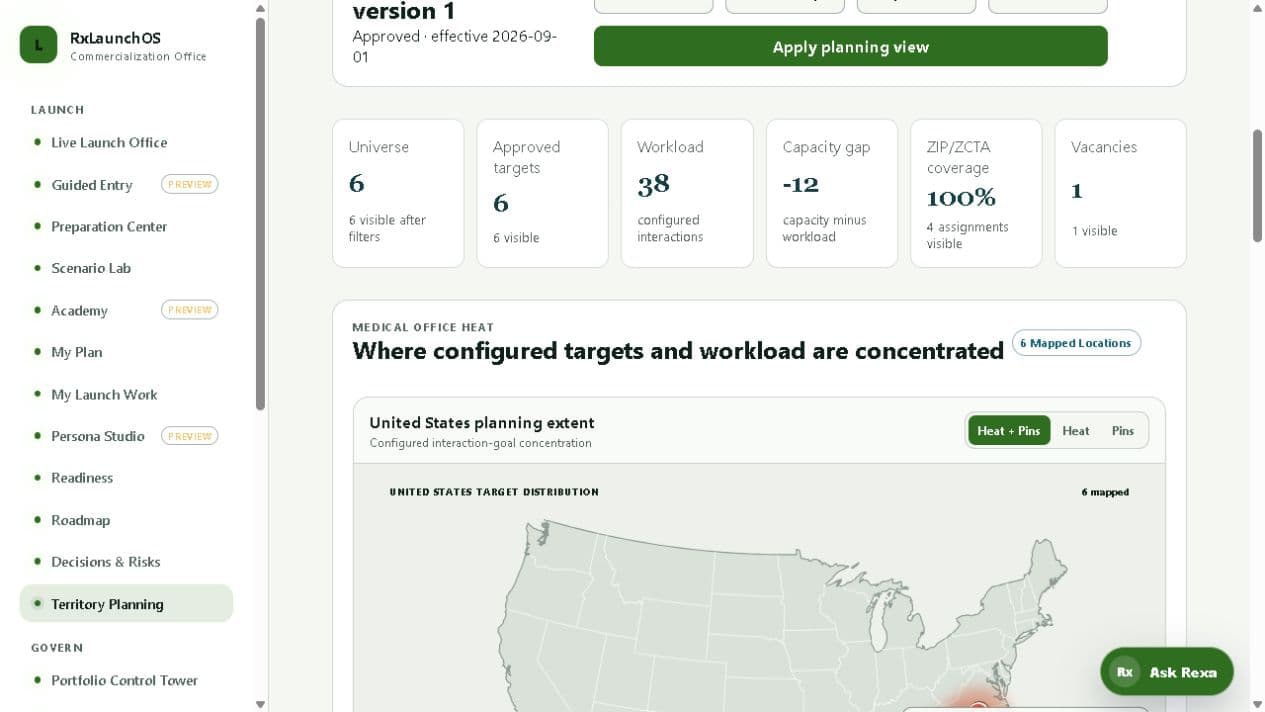
Actual platform screen
The current product connects target universes, geography, workload, capacity, and vacancies. For aesthetic medicine, the same operating mechanic would be configured around practices, providers, and adoption conditions.
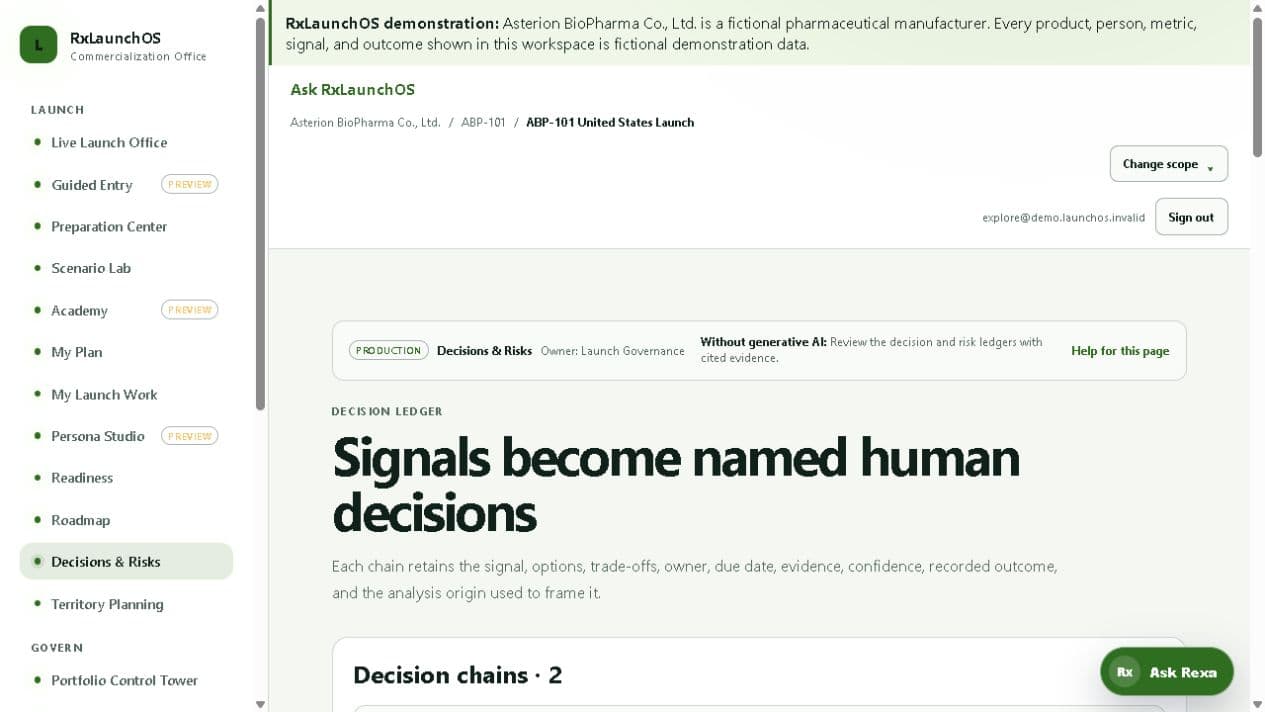
Actual platform screen
Direct, distributor, hybrid, and staged routes can be compared without losing the assumptions, trade-offs, evidence, owner, or human approval behind the decision.
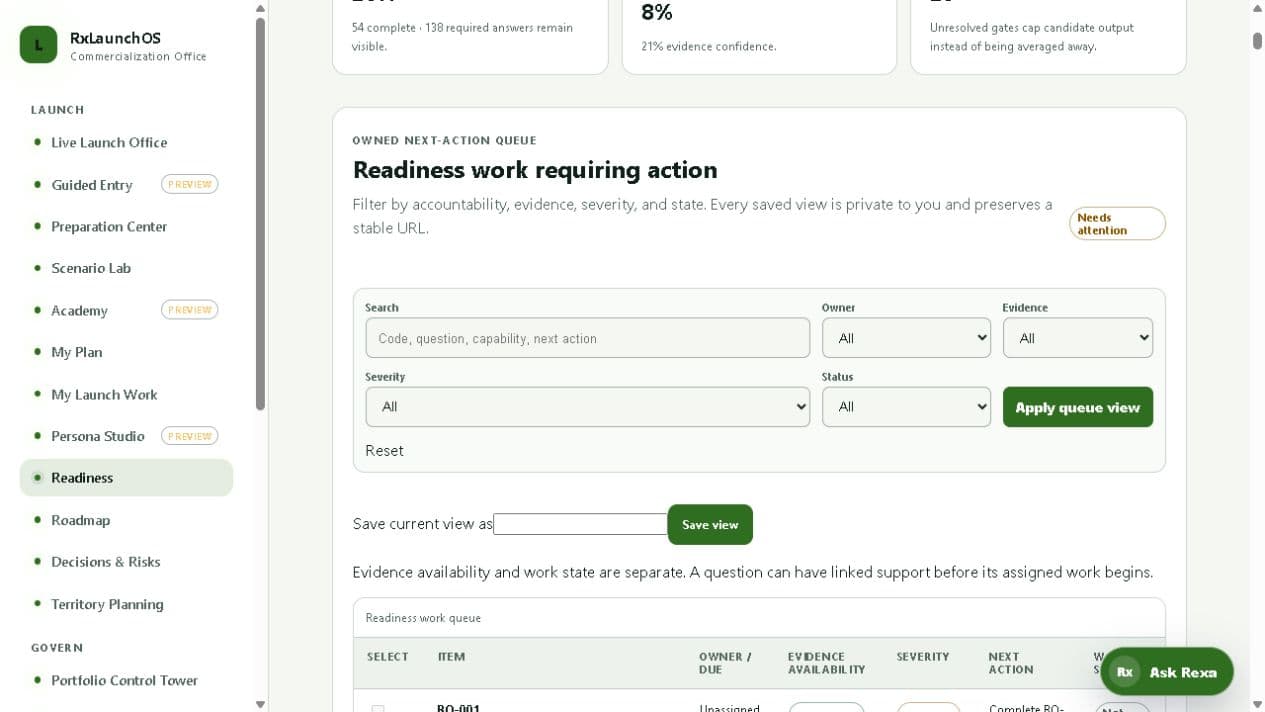
Actual platform screen
Evidence, severity, ownership, and state turn provider education, staff confidence, and practice enablement gaps into visible work instead of disconnected follow-up.
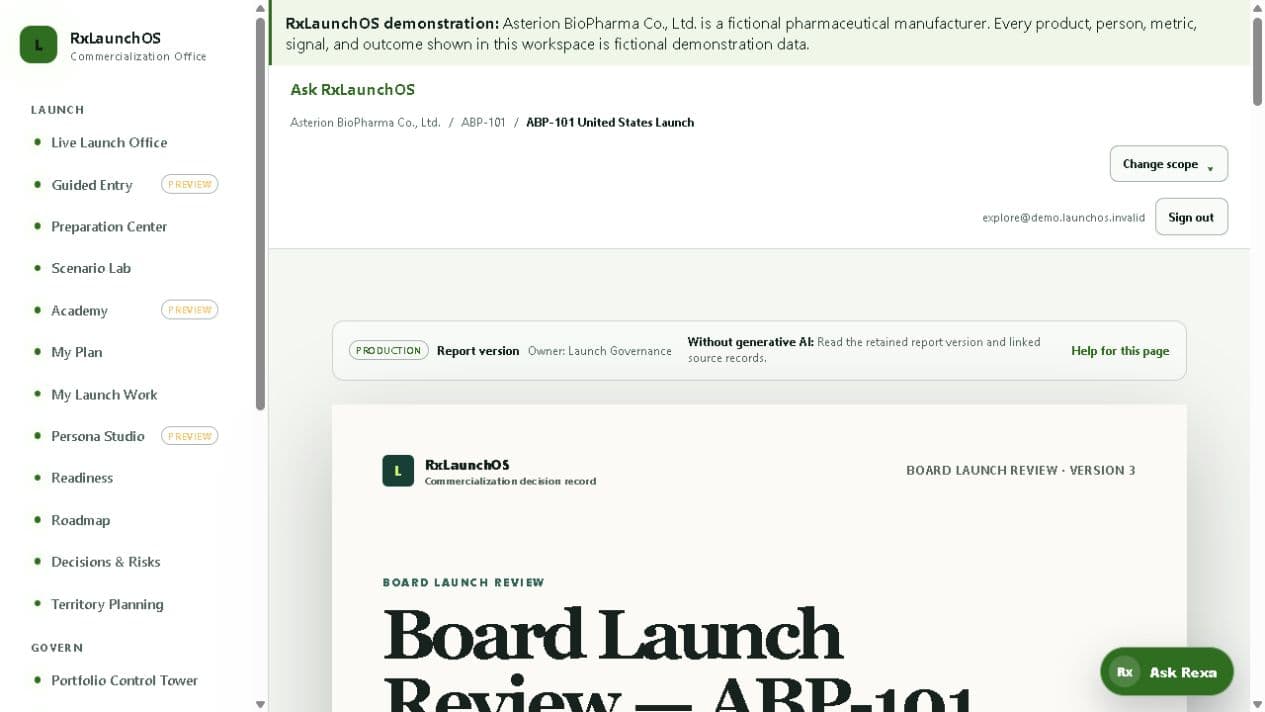
Actual platform screen
Leadership can review decisions, risks, dependencies, evidence, and supersession history in one governed record while accountable people retain approval authority.
Commercialization capabilities
Success depends on the product, the provider, the practice team, the channel, and the patient experience working as one commercial system. UEM helps leadership make those connections explicit and govern the decisions behind them.
01
Define the practice segments, account priorities, routes to market, partner roles, and commercial assumptions that should shape the launch.
02
Connect product positioning with provider education, practice economics, staff confidence, patient experience, and the realities of adoption inside a professional setting.
03
Design the right field, inside, distributor, training, and account-support model for the product, channel, geography, and stage of growth.
04
Make claims, evidence, owners, dependencies, risks, milestones, and performance signals visible before commercial activity outruns the operating system.
Different jobs, one controlled launch record
These proposed role lenses are being tested with manufacturers and experienced practice-channel operators. They change the questions and planning horizon; they do not create access, rank employees, or replace accountable leadership.
Market, model, and investment
Pressure-test category assumptions, channel economics, capability gaps, partner choices, investment gates, and launch risks before capital is committed.
National commercial design
Connect positioning, target practice segments, account strategy, coverage, distributor roles, education, measures, and launch sequence.
Coverage and intervention
Compare territory coverage, manager capacity, practice barriers, training needs, partner performance, and evidence-backed resource requests.
Practice adoption plan
Turn provider, staff, economics, education, barrier, commitment, and outcome facts into the next purposeful account action.
Readiness and confidence
Coordinate training readiness, provider and staff education, approved evidence, practice workflows, follow-up, and escalation.
Operating evidence
Keep roster, territory, inventory and service assumptions, data quality, partner obligations, adoption signals, and reporting connected.
The operating distinction
UEM brings the same evidence, readiness, organization, channel, and executive decision discipline used in regulated commercialization. Aesthetic medicine, however, has its own provider economics, purchase patterns, training needs, customer experience, and routes to adoption.
We do not copy a pharmaceutical launch template into an aesthetic business. The operating model is designed around the product category, the intended practice setting, the evidence available, and the capabilities the organization can support.
Named-brand affiliations, client outcomes, and clinical claims are never implied without authorization and evidence.
Connected work
UEM contributes commercialization and operating-model perspective to ClearSpec Labs, a separate Seven16 Group research-commerce initiative built around clearer product information and evidence governance.
ClearSpec Labs' current public catalog is for research use only. It is not a source of products for human or veterinary use.
Visit ClearSpec LabsSystem direction
This work is informing a future aesthetic-medicine configuration of UEM's commercialization operating system: separate sector methodology, shared decision discipline, and no reuse of pharmaceutical assumptions as aesthetic-market facts.
The sector configuration is exploratory and is not represented as a generally available, off-the-shelf product today.
Explore the RxLaunchOS modelStart with the market decision
Rexa is Upper Echelon Management's public AI concierge. Do not share patient information, passwords, trade secrets, or confidential company information.